
Our Science
A liposomal enzyme delivery platform designed to break down alcohol in the stomach before absorption
The problem
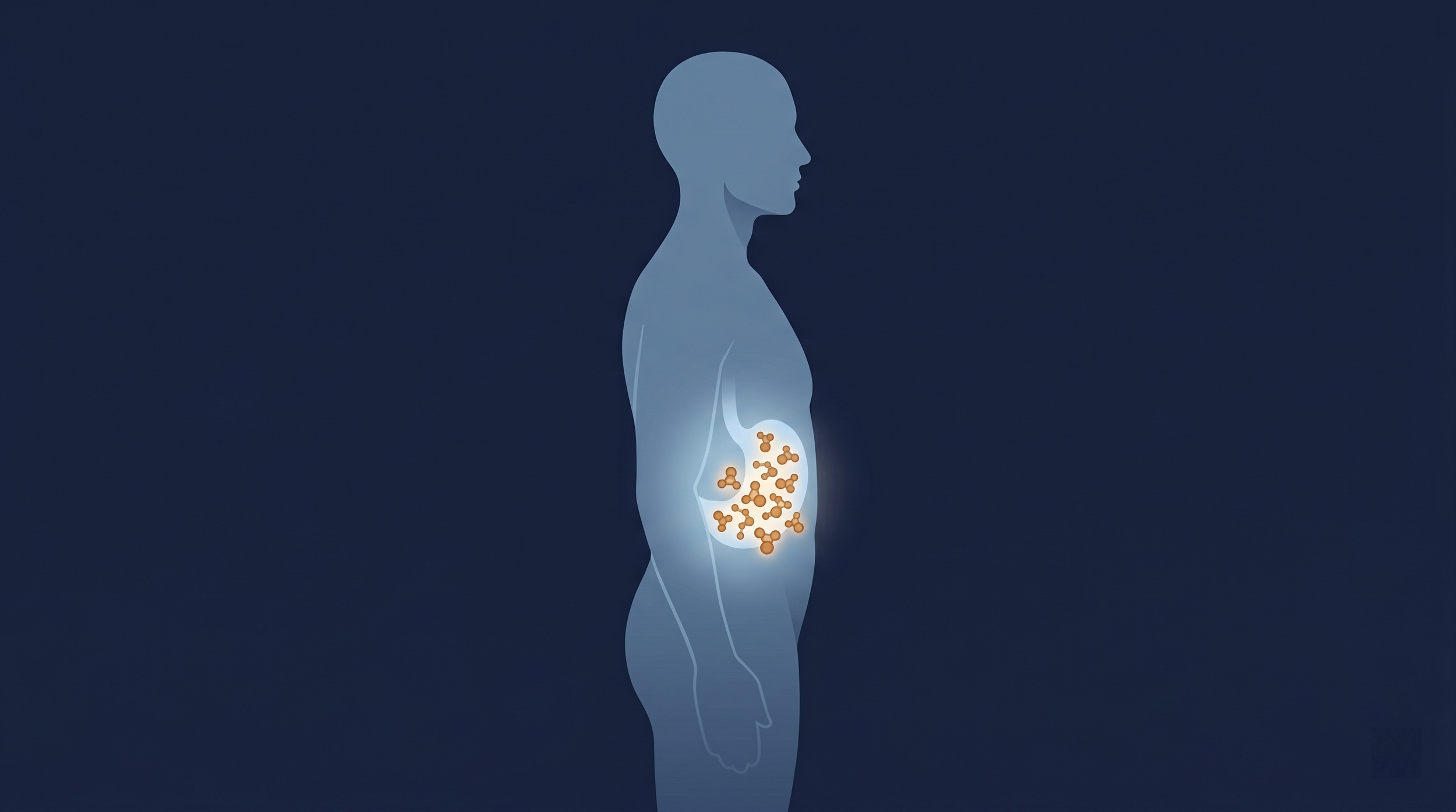
When you drink, your body converts ethanol into acetaldehyde, a toxic compound responsible for flushing, nausea, headaches, and rapid heartbeat. Most people clear acetaldehyde quickly using an enzyme called ALDH2.
But roughly 8% of the global population, predominantly in East Asia, carries a genetic variant that makes their ALDH2 enzyme ineffective. For these 540 million people, even a single drink can cause severe discomfort. There is no approved supplement or medication that addresses this at the source.
Our approach
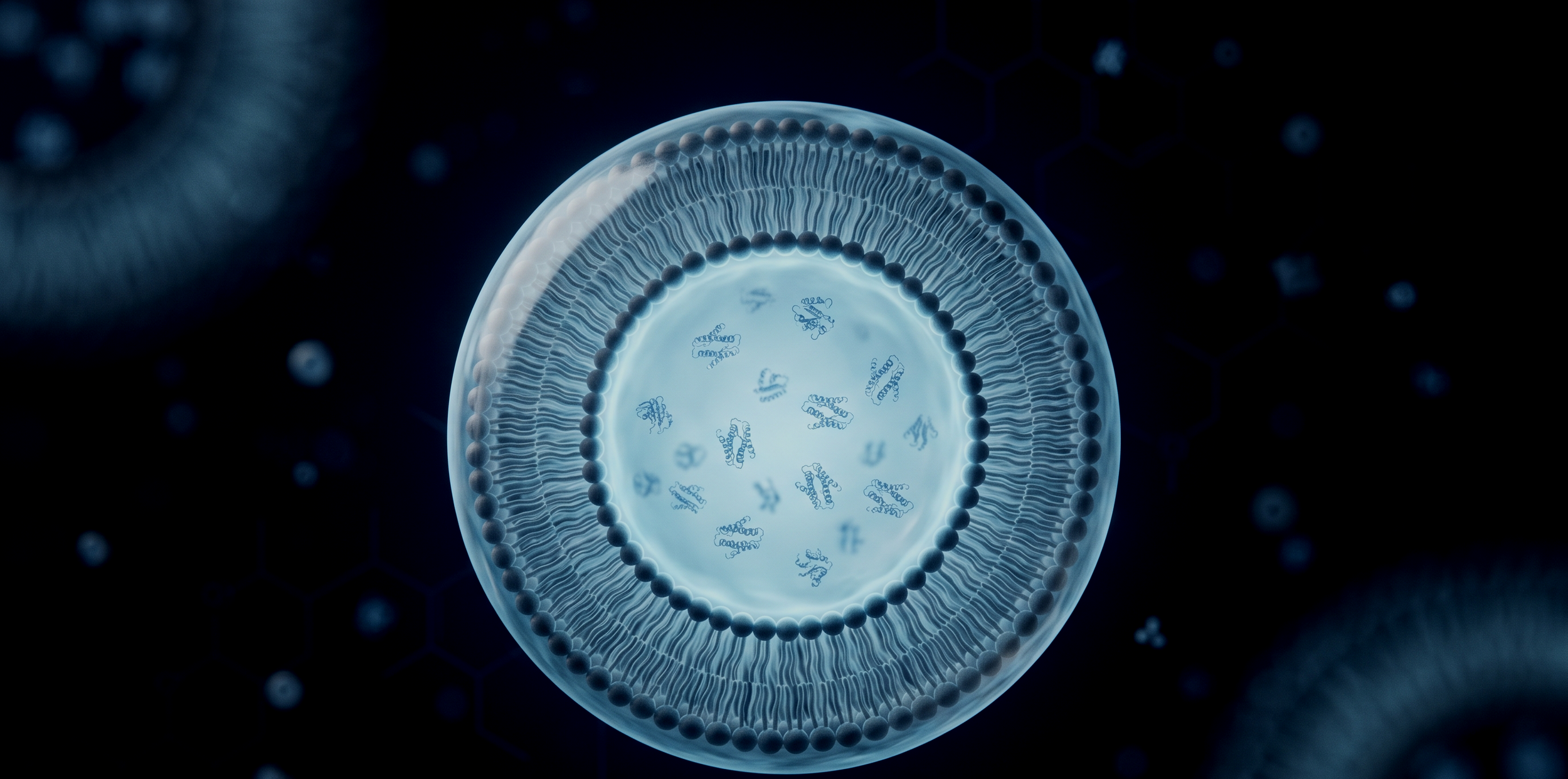
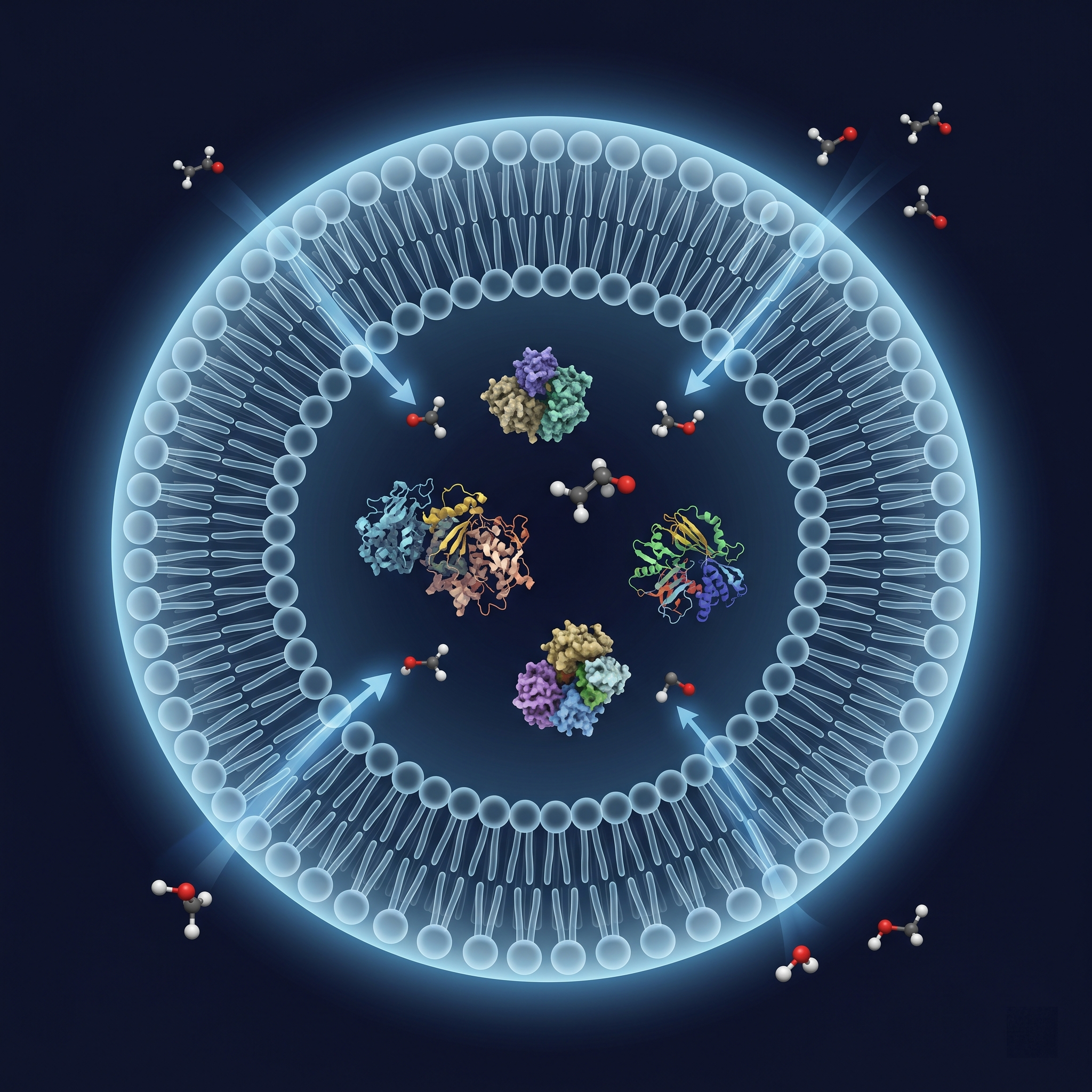
Alcolase is developing an enzyme system encapsulated in liposomes. The liposomal shell is designed to protect the enzymes from stomach acid and digestive proteases, delivering them intact to where alcohol is present.
Inside the liposome, the enzyme cascade is designed to work as follows: an alcohol-degrading enzyme converts ethanol to acetaldehyde, and an aldehyde-degrading enzyme converts acetaldehyde to harmless acetate.
The concept relies on ethanol diffusing through the lipid bilayer to be processed in situ. The entire reaction is intended to take place in the stomach, before alcohol is absorbed into the bloodstream. In the gut, the liposome breaks down naturally into amino acids and free fatty acids.

Why Liposomes?
Enzymes are fragile. Stomach acid and proteases destroy most enzymes before they can act. Liposomes address this by creating a protected micro-environment designed to keep enzymes active and functional.

The approach draws on principles from supplements used for other enzyme deficiencies, such as lactose intolerance, and is adapted with a novel encapsulation technology to address the specific challenge of alcohol metabolism.
What is next?
We are currently advancing our formulation through enzyme engineering and preparing for animal efficacy studies.
Our EUR 1.5M pre-seed round, co-led by Ada Ventures and Delphinus Venture Capital, funds this next phase of development toward our first target markets: Singapore and South Korea.